
The core principles of hair transplant aftercare
During the early healing period, the main priorities are to avoid unnecessary contact with the recipient area, keep to the cleaning routine you were given and attend any planned follow-up. The NHS advises being especially careful with transplanted hair during the first two weeks because the grafts are not yet secure.
Aftercare instructions are procedure-specific. Advice that was correct for another patient may not match your technique, donor area, medicines or recovery. If written instructions and general online information differ, contact your clinic for clarification rather than combining the two plans.
Do not touch, scratch, rub or pick at the recipient area unless your clinic has specifically instructed you to perform a particular washing or scab-care step.
Washing after a hair transplant
The timing and method of the first wash should come from your clinic. The NHS says gentle hand washing may be possible around day six, while Cleveland Clinic describes earlier washing in some recovery plans. That difference is exactly why your own clinic’s schedule matters.
When washing is permitted
- use the products and water temperature recommended by your clinic
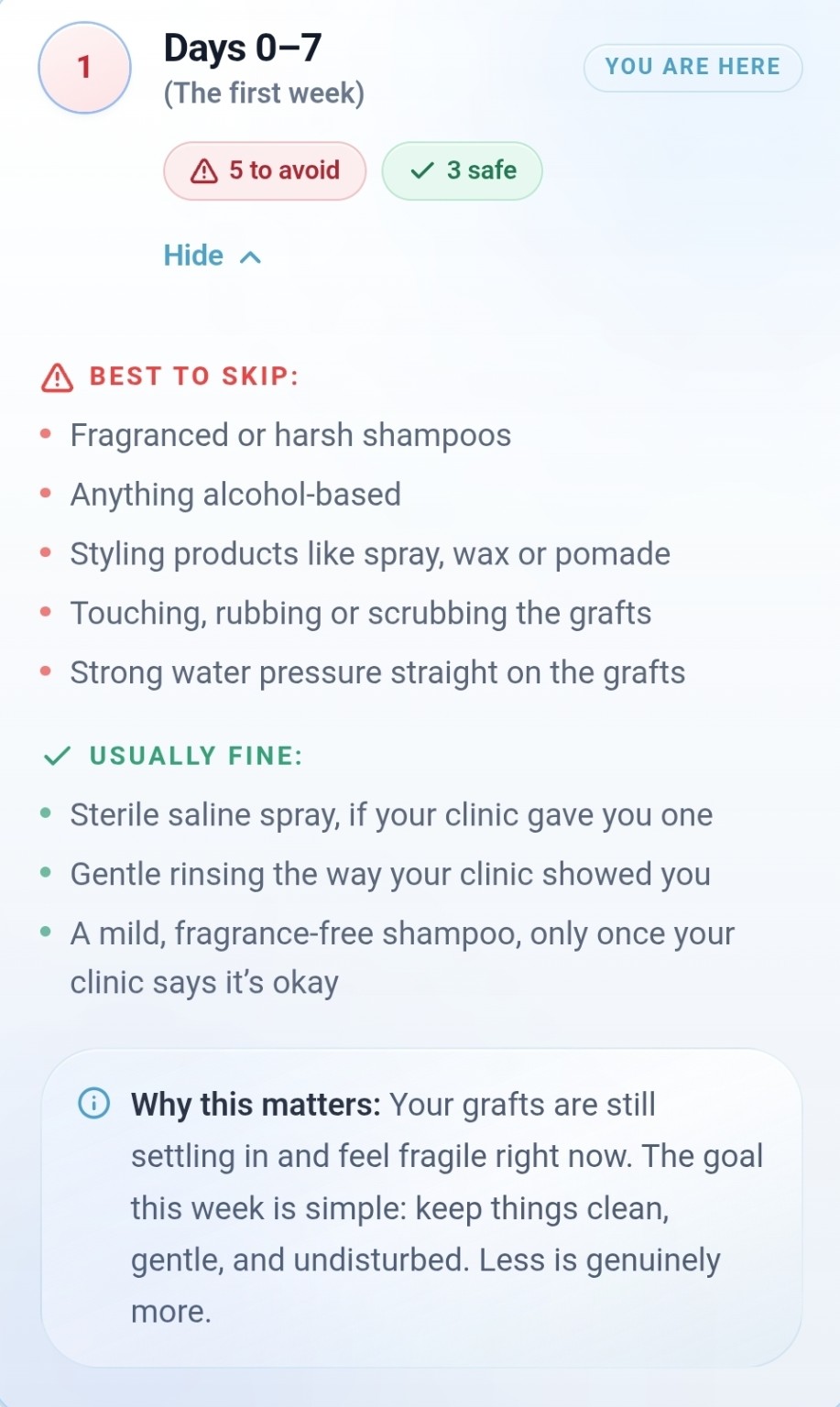
- avoid strong water pressure directly on the grafts
- avoid fingernails, forceful rubbing and rough towel drying
- follow the clinic’s instructions for rinsing and drying
More cleaning is not automatically better. If you are unsure whether crusting, dryness or product residue needs attention, send your clinic a clear photo and ask.
Sleep, pillows and accidental contact
Clinics may recommend a particular sleeping position during the first nights, often to reduce accidental pressure or contact. Follow the duration and setup your clinic gave you rather than assuming everyone needs the same arrangement.
Keep the sleeping area clean and arrange pillows so you are less likely to rub the recipient area while turning. If the scalp is accidentally touched or bumped, do not inspect it aggressively. Contact your clinic if there is bleeding, visible disruption or significant concern.
Exercise, work, headwear and sun
Return-to-activity advice varies. The NHS notes that some patients may be told to reduce exercise during the first month, while Cleveland Clinic describes a gradual return to light activity and later exercise. Your surgeon should decide what applies to you.
Ask before resuming
Check when you can return to strenuous training, swimming, helmets or tight headwear, dusty work and direct sun exposure. These activities involve different combinations of sweating, friction, pressure and contamination, so a single date is not appropriate for every patient.
Hair products and medication
Use only sprays, shampoos and topical products approved by your clinic during early recovery. Do not start, stop or change prescribed medication because of an online checklist. If a product causes a new reaction or you miss a dose, ask the prescribing clinician or pharmacist what to do.
Alcohol, smoking, supplements, hair-loss medicines and styling products are common areas of uncertainty. Their relevance depends on your health and treatment plan, so discuss them directly with your clinic instead of relying on another patient’s routine.
Scabs, crusts and the donor area
Temporary scabbing is common after a hair transplant. Crusts usually change as the skin heals, but they should not be forcibly removed before your clinic’s recommended scab-care period. Picking can irritate the area and makes it harder to judge what is normal.
The donor area can feel different from the recipient area. Cleveland Clinic lists temporary crusting, itching, altered sensation, pain, swelling and tightness among possible postoperative effects. Report symptoms that are severe or getting worse rather than assuming every change is routine.
When to contact your clinic
Contact your clinic promptly for severe, unexpected or worsening symptoms. Cleveland Clinic specifically advises contacting a provider for persistent fever, excessive scalp bleeding, severe redness or pain, or signs of infection such as green or yellow pus.
- pain, redness, warmth or swelling that is becoming more severe
- persistent or heavy bleeding
- pus, unpleasant discharge or a bad smell
- fever that does not settle or feeling significantly unwell
- any sudden change that worries you or conflicts with your clinic’s expectations
Seek urgent medical help if symptoms are severe or you believe there may be an emergency. GraftGuide and this website cannot diagnose complications.
Useful questions to ask your clinic
- When and exactly how should I wash my scalp?
- When should scabs be allowed to loosen or be removed?
- Which sprays, shampoos and medicines should I use?
- When can I sleep normally, exercise, wear a hat or return to work?
- Which symptoms should make me contact you immediately?
- When is my next follow-up?
Keep the answers with your discharge instructions so you have one clear plan to follow.
Recovery companion
Keep aftercare guidance organised
GraftGuide is a dedicated hair transplant recovery app supporting users from Day 1 to Month 18 with stage-specific information, recovery checks and private progress tracking.
It supports your recovery routine but does not replace your clinic or medical advice.
Sources and further reading
Clinical information was reviewed against NHS hair transplant guidance and the medically reviewed Cleveland Clinic hair transplant overview.