
“Common” does not mean “ignore it”
The NHS and Cleveland Clinic both describe temporary scalp changes after hair transplant surgery. The same symptom can be mild and expected in one situation but concerning when it is severe, spreading or worsening. Look at the direction of change as well as the symptom itself.
Your clinic knows the surgical technique, graft placement, donor area and medicines involved. Ask for its expected-symptom list and preferred contact method before leaving the clinic.
Redness after a hair transplant
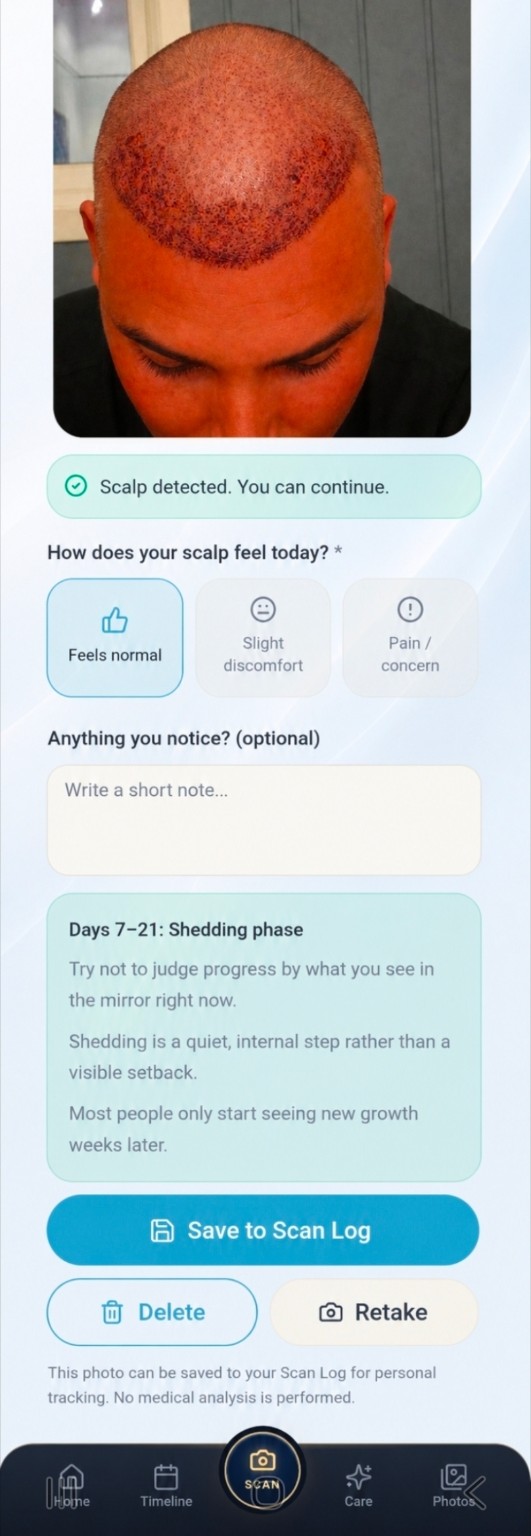
Some redness around treated areas can occur after surgery. The colour and how visible it looks vary with skin tone, lighting and the extent of treatment. It should be considered alongside pain, warmth, swelling, discharge and whether it is improving or spreading.
Severe redness—or redness accompanied by increasing pain or signs of infection—needs professional assessment. Online images cannot show whether your recovery is medically normal.
Swelling and tightness
The NHS lists a tight, achy and swollen scalp for a few days among common effects after a hair transplant. Cleveland Clinic also lists swelling and tightness as usually temporary postoperative effects.
Follow the positioning, medication and activity advice given by your clinic. Do not improvise treatments. Swelling that is severe, rapidly increasing or accompanied by breathing difficulty, fever, spreading redness or feeling very unwell requires prompt medical advice; seek urgent help for an emergency.
Itching, crusts and scabs
Cleveland Clinic lists itching and crusting or scabbing among possible temporary effects. The NHS also describes temporary scabbing where hair was transplanted. Even when itching is expected, scratching or picking can irritate the recipient area.
Use only the washing and scab-care method supplied by your clinic. Ask before adding oils, creams, shampoos or other products, because early-care routines differ.
Soreness, pain and altered sensation
Tenderness, aching or tightness can occur early in recovery. Temporary reduced sensation may also occur at the donor or recipient area. Cleveland Clinic lists pain or throbbing and loss of feeling among possible postoperative effects.
Pain should not simply be labelled normal when it is severe or becoming worse. Contact your clinic for severe pain, a sudden change, pain that does not follow the expected pattern they gave you, or symptoms combined with fever, discharge or increasing redness.
Shedding and a temporarily thinner appearance
Transplanted hairs often fall out several weeks after surgery before later growth begins. The American Academy of Dermatology describes shedding between two and eight weeks and notes that hair can look thinner by the third month. This can be visually unsettling without meaning the final result has been reached.
Shedding has its own timing and appearance, so use the dedicated guide to hair transplant shedding and shock loss for a fuller explanation.
Symptoms that should be discussed promptly
Cleveland Clinic advises contacting a provider for persistent fever, excessive bleeding, severe redness or pain, or infection signs such as green or yellow pus. The NHS advises contacting the clinic as soon as possible for severe pain or unexpected symptoms.
- severe or increasing pain
- redness, warmth or swelling that is spreading or worsening
- green or yellow pus, unpleasant discharge or a bad smell
- persistent or heavy bleeding
- fever that does not settle or feeling significantly unwell
- an unexpected change your clinic asked you to report
This list is not exhaustive. If you feel something is wrong, contact your clinic or a medical professional. Seek urgent medical help for severe symptoms or an emergency.
Use progress photos for context—not diagnosis
Photographs can help you describe changes to your clinic. Use consistent lighting and angles, record the date, and avoid filters. A photo-tracking habit can show whether an area is changing, but it cannot rule out a complication or replace an examination.
Recovery checks
A clearer record of recovery
GraftGuide supports users from Day 1 to Month 18 with stage-specific information, recovery checks and private photo tracking.
GraftGuide does not diagnose symptoms. Concerns should always be directed to your clinic or a medical professional.
Sources and further reading
Clinical information was reviewed against NHS hair transplant guidance, the medically reviewed Cleveland Clinic hair transplant overview and American Academy of Dermatology guidance.